
Benefits
Eliminates manual data entry from passport scans during onboarding, visa processing, and KYC checks, reducing errors from transcription to near zero
Processes passports from all ICAO-compliant countries without retraining, so your integration works globally from day one
Returns data in under a second per page, enabling real-time identity verification flows rather than batch-only processing
Decouples extraction from downstream validation, pass the structured fields directly into your AML, sanctions screening, or HR system without intermediate formatting
How it works
- Step 1
Upload
Send the document to the API as a file or a URL no special formatting required.
- Step 2
The engine reads the document
The engine analyzes the page layout and identifies the content that matters. The extraction engine reads both the Visual Inspection Zone and the Machine Readable Zone of a passport biographical page, mapping every visible and encoded field, including name, nationality, date of birth, document number, dates, sex, and signature, into structured JSON, while automatically detecting and correcting for image quality issues such as skew, cropping, and low lighting.
- Step 3
Structured JSON is returned
Every extracted element comes back as structured JSON, positioned and typed, ready to feed into downstream systems.
- Step 4
Confidence-based review
Each field carries a confidence score, so low-confidence results can be routed for human review instead of trusted blindly.
Extractable fields
Features
Simultaneous extraction from the Visual Inspection Zone (VIZ) and the Machine Readable Zone (MRZ) with cross-validation between the two sources
Automatic image preprocessing, deskewing, cropping to document boundaries, contrast enhancement, and blur detection, applied before extraction
Confidence scoring per extracted field to flag uncertain values for manual review in high-stakes verification workflows
Format-agnostic input acceptance: PDF, JPG, JPEG, PNG, TIFF, DOCX, and HEIC
REST API with Python SDK and comprehensive documentation for rapid integration
Use cases
Customer Onboarding and KYC Verification
Financial institutions, fintech apps, and crypto exchanges need to verify customer identity during sign-up. With ByteIt's passport extraction, a user uploads a photo of their passport, and the API returns structured identity fields, name, DOB, nationality, document number, that can be passed directly into AML and sanctions screening systems. The entire flow completes in seconds rather than minutes of manual review.
Hotel and Travel Check-In Automation
Hotels, car rental agencies, and airlines are required to capture guest identity data at check-in. Instead of photocopying passports and typing details into a PMS or booking system, front-desk staff scan the document with a phone or camera. ByteIt extracts the fields and pushes them into the property management system, cutting check-in time and eliminating data entry errors.
HR International Onboarding and Right-to-Work Checks
When hiring internationally, HR teams must verify a candidate's identity and right to work. Passport data extracted via ByteIt can populate HRIS fields automatically and be fed into background check and right-to-work verification services. This reduces the back-and-forth of manual document review and ensures compliance records are complete and searchable.
Visa and Immigration Application Processing
Embassies, consulates, and immigration authorities process thousands of passport copies daily. ByteIt's extraction engine reads passport fields from scanned applications and feeds structured data into case management systems. Case workers can focus on adjudication rather than data entry, and the structured output enables bulk reporting and analytics on application trends.
Integration with Downstream Systems via Workflow Automation
Extracted passport data can be connected to your CRM, HRIS, compliance platform, or case management system using general workflow automation tools such as n8n, Zapier, or Make. For example, a new passport scan triggers extraction, the structured result is sent to a verification API, and the verified identity record is created in your database, all without human intervention.
LIVE DEMO
Try passport extraction live
Upload a sample passport image or PDF to see the extracted fields in real time. ByteIt accepts JPG, PNG, PDF, and other common formats.
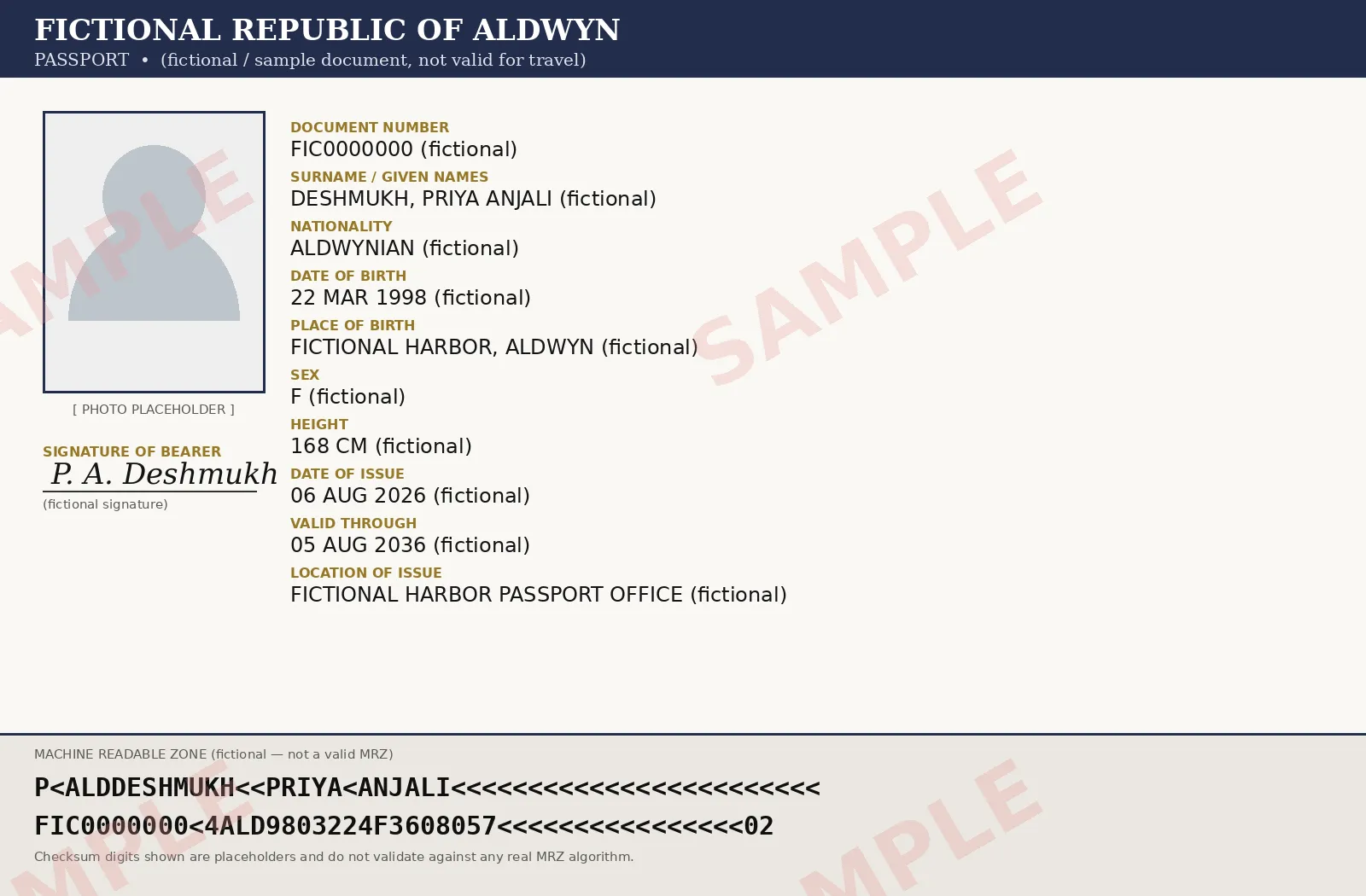
Select a document and press Parse
Want to run it on your own documents?
Ready to integrate? Get your API key in Studio.Business advantages
- Sub-second processing per page for real-time identity workflows
- Works with all ICAO-compliant passports, no per-country model training needed
- End-to-end encryption and GDPR-compliant data handling
- Free tier available: 1,000 credits per month with no credit card required
Frequently asked questions
Does ByteIt read the Machine Readable Zone (MRZ) on passports?
Yes. ByteIt extracts both MRZ lines (44 characters each) and parses them into their component fields, document type, issuing state, surname, given names, passport number, nationality, date of birth, sex, and expiry date, cross-referencing them against the VIZ output for consistency.
What file formats does the passport extraction API support?
The API accepts PDF, JPG, JPEG, PNG, TIFF, DOCX, and HEIC. Files can be uploaded as raw bytes or as a URL. Multipage PDFs are processed page by page, and only the biographical page is extracted.
How accurate is passport data extraction?
Accuracy depends on image quality, well-lit, front-facing passport scans with readable MRZ produce the best results. ByteIt applies automatic image preprocessing (deskew, crop, contrast) to improve extraction from sub-optimal images, and each field returns a confidence score to flag low-certainty values for manual review.
How do I integrate ByteIt's passport extraction into my application?
ByteIt provides a REST API and a Python SDK. You send the document file or URL to the endpoint, and the engine returns structured JSON. Integration guides and code samples are available in the documentation. You can also connect the output to downstream systems using workflow automation tools such as n8n, Zapier, or Make.
Does it handle passports from non-English-speaking countries?
Yes. Passports from any ICAO-compliant country are supported. The MRZ uses standardised Latin-character encoding regardless of the local language, so fields like name and nationality are always extractable. VIZ fields in non-Latin scripts (e.g. Arabic, Chinese, Cyrillic) are also captured where readable.
Can I process low-quality or damaged passport scans?
ByteIt includes image preprocessing steps, deskewing, boundary detection, contrast adjustment, and blur assessment, to handle common quality issues. Severely damaged or partially cropped documents will return lower confidence scores on affected fields rather than failing entirely, so you can decide how to handle edge cases in your workflow.
What is the pricing for passport extraction?
ByteIt offers a free Build plan with 1,000 credits per month. The Scale plan costs 260 € per month for 25,000 credits with parallel processing and team API keys. Enterprise plans with custom credit volumes, zero data retention, and VPC deployment are available on request.